Chemical Concrete Densification & Penetrating Sealers in Texas
Consolidate concrete pores from the inside out. Permanent anti-dusting seal that never peels, bubbles, or requires re-application.
Why Chemical Densification Beats Topical Sealers Every Time
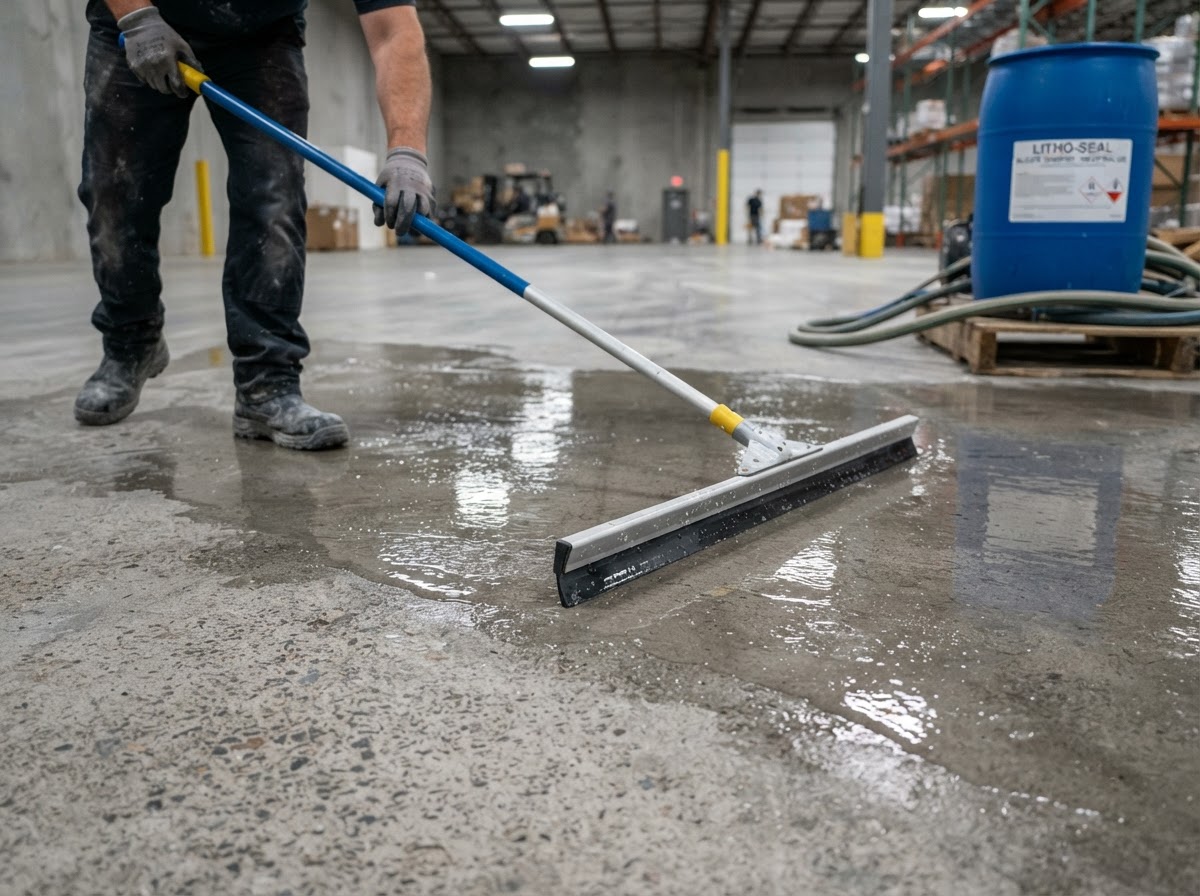
Traditional acrylic, polyurethane, or thin epoxy sealers form a plastic film on top of the concrete. When moisture vapor rises from the ground or heavy forklifts brake, that film blisters and peels. Chemical densification reacts within the concrete itself, making the slab fundamentally non-porous and harder than granite.
Molecular Free-Lime Reaction
Silicates penetrate up to 1/4 inch into concrete pores, chemically bonding with calcium hydroxide (free lime) to create Calcium Silicate Hydrate (C-S-H gel).
Permanent Anti-Dusting
Because the microscopic capillary pores are completely plugged with dense rock crystal, concrete can no longer slough off silica dust particles.
Increased Abrasion Resistance by up to 50%
ASTM C779 standard tests demonstrate dramatic increases in surface compressive and abrasion strength against wheel friction.
Stain & Fluid Retardation
Pores are tightly constricted, drastically slowing the absorption of hydraulic fluid, motor oils, brake cleaners, and food acids.
Colloidal Silica vs. Sodium vs. Lithium Densifiers
MRK utilizes advanced ultra-low viscosity lithium and nano-colloidal silicates. Unlike cheap sodium silicates of the past, lithium does not cause hazardous alkali-silica reactivity (ASR) nor leave sticky white efflorescence residues on your floors.